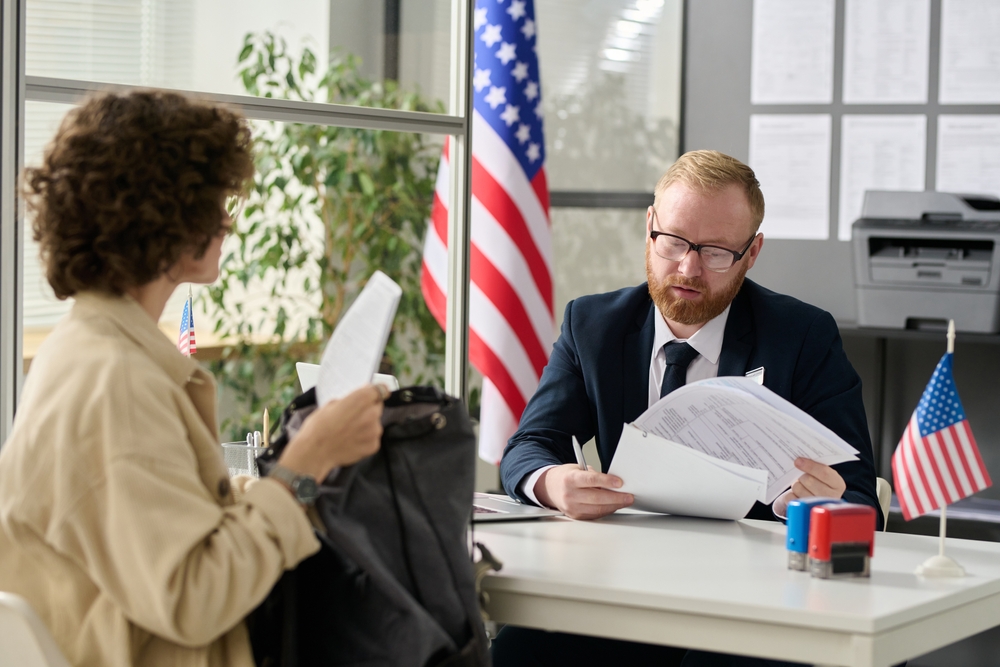
For many immigrants, the green card interview is the final hurdle before becoming a lawful permanent resident of the United States. It’s also one of the most nerve-wracking parts of the immigration process. Applicants often imagine an intense interrogation designed to uncover mistakes or catch them off guard.
In reality, that’s not the purpose of the interview.
A green card interview is primarily a verification process. The immigration officer’s job is to confirm the information you’ve already submitted, review your original documents, and determine whether you qualify for permanent residence under U.S. immigration law.
With the right preparation, the interview can be straightforward and stress-free. This guide explains what to expect, how to prepare, the documents you’ll need, and what happens after your interview.
What Is a Green Card Interview?
A green card interview is an in-person meeting with a U.S. Citizenship and Immigration Services (USCIS) officer if you’re applying for adjustment of status within the United States, or a consular officer if you’re completing immigrant visa processing abroad.
During the interview, the officer will:
- Verify your identity
- Review your application and supporting documents
- Ask questions about your eligibility
- Clarify any inconsistencies or missing information
- Confirm that you meet the legal requirements for permanent residence
The interview isn’t designed to trick applicants. Instead, it’s an opportunity for the government to ensure that all information provided in your application is accurate.
For marriage-based applicants, the officer will evaluate whether the marriage is genuine. Employment-based applicants can expect questions regarding their job offer and employment history, while family-based applicants may be asked about their relationship with the sponsoring relative.
Who Must Attend the Interview?
Most green card applicants are required to appear for an interview. The attendance requirements generally depend on the category of the application.
Marriage-Based and Family-Based Applications
Typically, both the applicant and the sponsoring spouse or qualifying relative must attend. In marriage-based cases, USCIS often interviews both spouses together, although separate interviews may be conducted when additional verification is needed.
Employment-Based Applications
Usually, only the applicant attends the interview. Employers generally do not need to appear, although applicants should bring documentation supporting their employment.
Refugees and Asylees
Applicants adjusting status after receiving refugee or asylum protection are generally required to attend their own interviews. Family members included in the application may also need to appear.
Consular Processing Applicants
Individuals applying for immigrant visas through a U.S. embassy or consulate, including Diversity Visa lottery winners, must attend an in-person interview overseas.
Although USCIS occasionally waives interviews, applicants should always assume they will be required unless they receive official notice stating otherwise.
Interview Location Changes for Consular Processing
Beginning November 1, 2025, the U.S. Department of State generally schedules immigrant visa interviews in an applicant’s country of residence or, upon request, their country of nationality.
If routine immigrant visa services are unavailable in the country of residence, the case may be transferred to an alternate embassy or consulate for processing.
Applicants completing consular processing should carefully review their appointment notice for the assigned interview location.
Who Can Accompany You?
Many applicants wonder whether they must attend the interview alone.
Fortunately, you may be allowed to bring certain individuals depending on your circumstances.
Interpreter
Applicants who are not fluent in English may bring a qualified interpreter unless USCIS provides one. The interpreter should be fluent in both languages and carry valid identification. The interpreter cannot be a relative or your attorney.
Attorney or Accredited Representative
An immigration attorney or accredited representative should always accompany you during the interview to provide legal guidance and protect your interests throughout the process.
Family Members
Friends and family members are generally not permitted inside the interview room unless specifically authorized. However, they may usually wait in the reception area.
Always review your appointment notice carefully for any specific instructions regarding accompanying individuals.
Receiving Your Interview Notice
Interview notices are sent by either USCIS or the U.S. Department of State, depending on where your application is being processed. Applicants adjusting status inside the United States receive notices from their local USCIS field office.
Applicants completing consular processing receive appointment information through the National Visa Center (NVC) or the designated U.S. embassy or consulate. To avoid unnecessary delays, make sure USCIS or the NVC always has your current mailing address and contact information.
Documents You Should Bring
Being organized can make your interview significantly smoother. Although document requirements vary by case, applicants should generally bring:
Identity Documents
- Valid passport
- Government-issued photo identification
- Current visa (if applicable)
- Form I-94 Arrival/Departure Record
- Employment Authorization Document (if issued)
Civil Documents
Bring original versions (plus copies) of:
- Birth certificate
- Marriage certificate
- Divorce decrees
- Adoption records
- Name change documents
Financial Documents
If your case requires financial sponsorship, bring:
- Form I-864, Affidavit of Support
- Recent federal tax returns
- W-2s
- Pay stubs
- Employment verification letters
Supporting Evidence
Marriage-based applicants should bring substantial evidence demonstrating a bona fide marriage, including:
- Joint bank account statements
- Lease or mortgage documents
- Utility bills
- Insurance policies
- Family photographs
- Travel records
- Birth certificates of children
- Correspondence addressed jointly
Organizing your documents in labelled folders or binders allows the interview to proceed more efficiently and demonstrates thorough preparation.
What Happens During the Interview?
Most green card interviews follow a similar process.
Arrival
Plan to arrive at least 15 to 30 minutes early. You’ll pass through a security screening similar to that at an airport.
Oath
After being called into the interview room, you’ll present identification and take an oath promising that your statements will be truthful.
Application Review
The officer will review your application and compare your answers with the information already submitted. If you’re applying through marriage, your spouse will usually participate in part or all of the interview.
Questions
The officer may ask follow-up questions regarding your eligibility, background, employment, travel history, or relationship.
Most interviews last between 15 and 30 minutes, although more complex cases may require additional time.
How to Prepare for Your Interview
Preparation is one of the best ways to reduce stress and improve your confidence.
Review Your Application
Read through every form submitted to USCIS before your interview. Many applicants forget information they included months earlier, leading to avoidable inconsistencies.
Organize Your Documents
Keep documents neatly arranged so you can quickly locate any requested evidence.
Practice Common Questions
Marriage-based applicants should review important dates, relationship history, daily routines, and future plans together. Employment-based applicants should be prepared to discuss their position, employer, duties, and qualifications.
Dress Professionally
Business attire is not required, but clean, neat, and professional clothing creates a positive impression.
Tell the Truth
If you don’t remember an exact date or detail, it’s perfectly acceptable to say so rather than guessing. Honest answers are always better than inaccurate ones.
Common Questions Asked During the Interview
Although every interview is unique, most questions fall into several categories.
Personal Information
- What is your full name?
- What is your date of birth?
- Where do you currently live?
- Who lives with you?
Immigration History
- When did you first enter the United States?
- What visa did you use?
- Have you ever overstayed a visa?
- Have you previously applied for immigration benefits?
Marriage-Based Questions
- How did you meet?
- When did you get married?
- Where do you live together?
- What did you do last weekend?
- How do you celebrate holidays?
- Who pays the household bills?
Employment-Based Questions
Applicants may be asked:
- What company do you work for?
- What are your job duties?
- Who is your supervisor?
- What is your salary?
Security Questions
Applicants should expect questions regarding:
- Criminal history
- Immigration violations
- Membership in prohibited organizations
- Prior arrests
- False claims to U.S. citizenship
These questions are standard and appear on many immigration forms.
Common Mistakes to Avoid
Many interview problems are entirely preventable.
Avoid:
- Giving answers that conflict with your application
- Guessing when you don’t know the answer
- Bringing incomplete documentation
- Memorizing scripted responses
- Arguing with the officer
- Arriving late
Remain calm, respectful, and truthful throughout the interview.
What Happens After the Interview?
Several outcomes are possible.
Approval
Some applicants receive verbal approval at the conclusion of the interview.
The physical green card is generally mailed within a few weeks.
Request for Evidence (RFE)
If additional documentation is needed, USCIS may issue a Request for Evidence.
Receiving an RFE does not necessarily indicate a problem with your case.
Additional Review
Some applications require further background checks or supervisory review before a final decision is made.
Denial
If USCIS denies the application, you’ll receive a written explanation outlining the reasons and any available options.
After You Receive Your Green Card
Approval marks the beginning of your life as a lawful permanent resident.
Depending on your case, you’ll receive either:
- A 2-year conditional green card (typically for marriages less than two years old), or
- A 10-year permanent resident card
Permanent residents may:
- Live and work permanently in the United States
- Travel internationally and return using their green card
- Apply for a Social Security card if needed
- Become eligible for U.S. citizenship after meeting residency requirements
Permanent residents must also comply with U.S. laws, file tax returns, carry proof of permanent resident status, and notify USCIS of address changes.
Final Thoughts
The green card interview is an important milestone—but it doesn’t have to be intimidating.
USCIS officers are not looking to trick applicants or create unnecessary obstacles. Their goal is to verify that your application is accurate and that you qualify for permanent residence under U.S. immigration law.
By reviewing your application, organizing your documents, practicing common interview questions, and answering honestly, you can approach your interview with confidence.
Need help preparing for your green card interview? An experienced immigration attorney can review your application, conduct a mock interview, identify potential issues, and help ensure you’re fully prepared for this important step toward permanent residency. If you have questions about how this may affect your organization or immigration matters, or if you would like a case-specific assessment, please book an appointment here.
Disclaimer
This article is provided for informational purposes only and does not constitute legal advice. Immigration laws and procedures are subject to change, and every case is unique. Individuals should consult with a qualified immigration attorney regarding their specific circumstances.