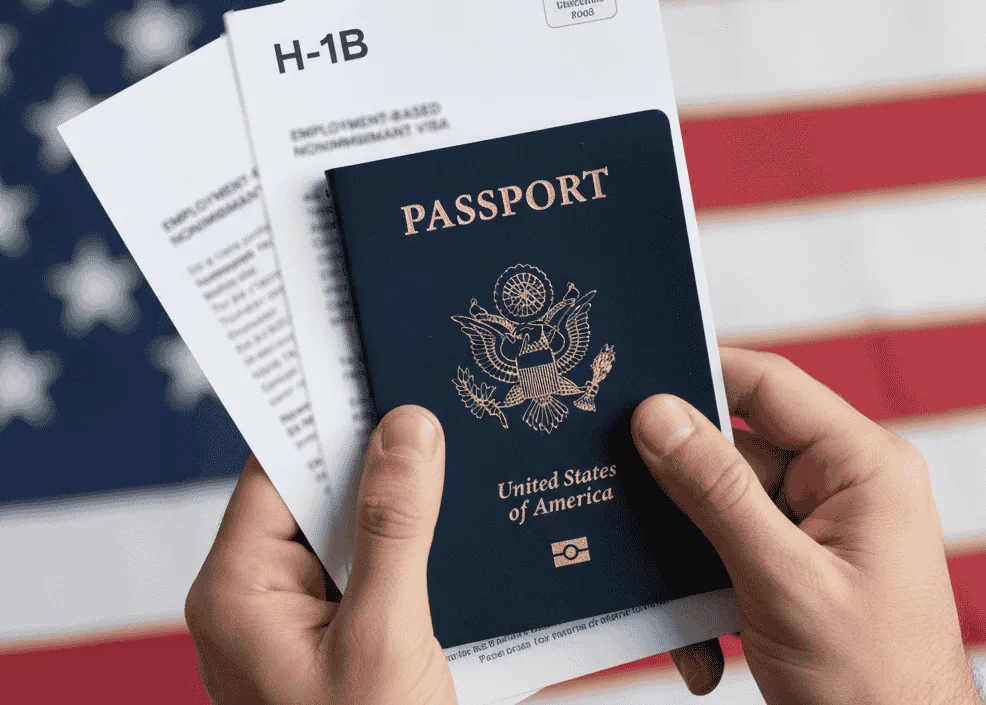
Starting on September 21, 2025, at 12:01 a.m. EDT, the corporate sponsor will have to pay a $100,000 charge in order for H-1B employees to enter the United States. This implies that any H-1B employees who are presently abroad might not be permitted entry until their US employer has paid the $100,000 charge. The Presidential Order does not apply to H1b applications submitted before the aforementioned date, according to a letter released by CBP. The CBP memo can be viewed here. H1B holders whose petitions were accepted before the regulation, however, are not guaranteed entry into the United States.
H1B applications will soon need to pay a $100,000 charge, although it’s not yet clear when, how, or whether this would apply to individual employees or to the entire organization. The announcement that it would be “annual” merely raised more questions. The petitions that were postmarked on Friday, September 19, 2025, might have to pay the charge. The phrase “refusal of entry into the United States” appears in the presidential order instead of filing a petition for H-1B.
So, does this mean the burden of the fee lies with the employer or the employee?
Additionally, if hiring specific people is judged to be in the national interest and not a security danger, the proclamation states that the Secretary of Homeland Security may waive the limitation. This opens the possibility of exceptions, although it is yet unknown exactly who would qualify for a waiver.
Implementation-Related Challenges

Although it is unclear as of this writing, instructions on how to collect or enforce the $100,000 fine have recently been published. Inquiries about the frequency and number of times the fee is paid are also included. Although it is conjecture, the order’s simple language seems to suggest that this will be per firm. The proclamation writes “annual,” which absurdly amounts to $300,000 for a three-year H1b. The question of who will bear responsibility—USCIS, the Department of State, or both—remains. Though no guidance has been released on how or when such waivers would apply, the proclamation does contain a clause that permits the Secretary of Homeland Security to waive the charge in situations judged to be in the national interest.
Text from the Presidential Order That Is Confusing:
In spite of the comments made by the White House, USCIS, and CBP, the proclamation’s wording apparently did not expressly bar renewals or current H1B holders. There is an obvious discrepancy between the announcement and subsequent clarifications, according to numerous news outlets, which has left companies and employees in a state of constant anxiety. As a precaution, many lawyers and companies have asked workers overseas to return before the effective date, which was practically impossible considering the amount of time between the decree and its implementation.
Further information

President Trump’s order is anticipated to be halted in the US after being challenged in court. A temporary restraining order might not affect the entry requirement because the President has extensive authority over U.S. operations overseas and at the point of entry.
The White House has indicated that the 100,000 dollar fee will be imposed on new H-1B petitions only; however, the language of the proclamation and the ambiguity and inconsistency of the official guidance raise many questions.
The new changes seem not to apply now to the existing holders of H-1B irrespective of whether they are in the United States or elsewhere. H-1B workers and employers, in their turn, are advised to be cautious and monitor the official announcements of the Department of Homeland Security, the Department of State, and USCIS.
Luke Bowman Law will continue to monitor and update the situation. If you have questions regarding your specific situation, feel free to contact us or book an appointment here.